October 12, 2026


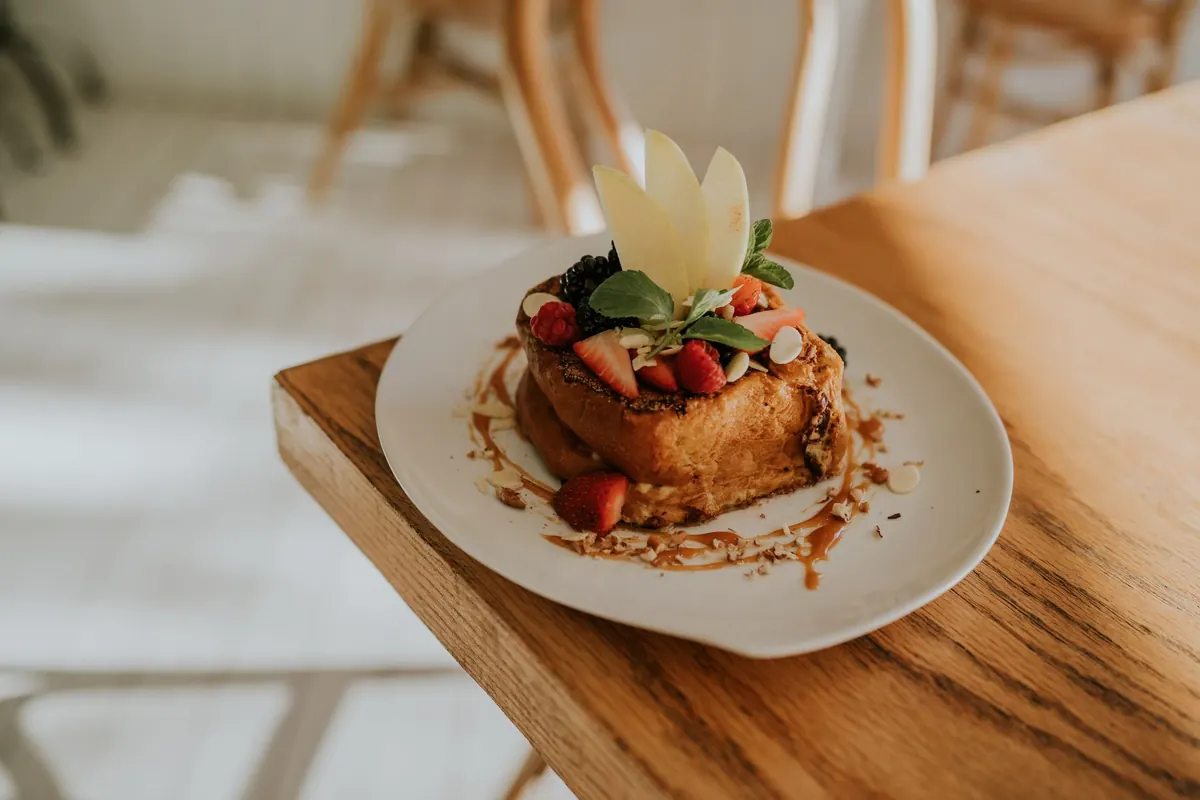
Bread pudding sits in a sweet spot between thrifty and luxurious: stale bread, milk, eggs, a little sugar, and an hour in the oven. It also has more small failure points than most desserts. A loaf that's too soft, a custard that's too thin, a soak that runs long — any one of those can turn a promising pan into sweet scrambled eggs on mush. What follows is the checklist to run through every time, in the order you'll actually make the decisions, so the result stays consistent: custard barely set, bread still recognizable, top burnished and crisp.
Bread pudding is a structural problem before it's a flavor problem. The bread has to drink up custard and still hold a shape. Soft, spongy loaves can't do that — they collapse into paste and leave you with a pudding that has no texture at all.
Day-old challah, brioche, French bread, baguette, sourdough, panettone, and raisin bread all work well. Croissants make a spectacular version, though their butter content means you'll want a slightly richer custard and a shorter soak.
Standard sandwich bread, hamburger buns, and fresh brioche straight from the bakery case. They're too moist and too fine-crumbed to hold up.
Whatever you choose, dry it first. Cut the bread into rough one-inch cubes and leave them uncovered on a sheet pan overnight, or spread them on a pan and toast at 300°F for 10 to 15 minutes, until the edges feel dry but haven't browned. If your bread is fresh, this step isn't optional — it's the difference between a pudding and a puddle. Leave the crusts on; they keep the cubes from fusing together and give the finished dish something to chew against.
You don't need a recipe once you know the proportion: one cup of dairy to one large egg to about two tablespoons of sugar. Scale it up or down and you'll land in the right territory every time.
For a standard 9x13-inch pan, that looks like eight cups of packed bread cubes, three cups of dairy, three large eggs, a third to a half cup of sugar, a teaspoon of vanilla, and a quarter teaspoon of salt. Whole milk is the baseline. Half-and-half, or a fifty-fifty blend of milk and cream, gives you a noticeably silkier custard. Skim milk is a poor trade — it makes a thin custard that's more likely to separate.
Salt is the ingredient people skip, and it's the one that keeps the whole thing from tasting flat. Don't skip it.
Whisk the eggs and sugar together first, then add the dairy gradually. Whisk gently; you're combining, not aerating. Foam on the surface bakes into a dry, spongy top, so if you've built up bubbles, skim them off or let the custard rest a few minutes before pouring. For an extra-rich version, add one additional yolk for every four whole eggs. If you want the smoothest possible result, strain the custard through a fine-mesh sieve before it goes anywhere near the bread.
Butter your baking dish generously, then pile in the bread. Pour the custard over the top and press down gently with a spatula so every cube gets wet. Now wait.
Sturdy bread like sourdough or baguette needs 20 to 30 minutes at room temperature. Delicate bread like brioche or croissant needs only 10 to 15. You can also assemble the dish and refrigerate it for up to a few hours, which is convenient for timing — but beyond that, the bread starts to break down.
The cue you're looking for: the cubes look saturated all the way through but still hold their corners. If there's still a pool of liquid in the dish after half an hour, either the bread was too fresh or you've made too much custard. Scatter in a handful of extra dried cubes rather than baking it as is.
Don't stir the mixture. You want layers and pockets of custard, not a uniform mush.
Set the oven to 325°F to 350°F. The lower end gives you a more delicate custard; the higher end browns the top faster. Either works. If you want the silkiest possible result, set the dish inside a larger roasting pan and pour hot water into the outer pan until it comes halfway up the sides, then bake at 325°F.
Expect roughly 45 to 55 minutes for a 9x13 pan, longer for a deeper, smaller dish. If the top is browning before the center is anywhere near set, tent it loosely with foil and uncover it for the last 15 minutes so the surface can crisp.
Here's how to tell it's done:
Then let it cool for 20 to 30 minutes before serving. The custard finishes setting as it sits, and cutting in early is the most common reason for a weeping, soupy slice.
Plump raisins in hot water, rum, or bourbon before they go in, or they'll pull moisture from the custard and stay stubbornly chewy. Toasted nuts, chocolate chunks, diced apple or pear, and a little orange zest all earn their place.
The trick with anything chunky is layering: half the bread, then the add-ins, then the rest of the bread on top. Scattered on the surface, they sink or burn.
For the top, brush with melted butter and sprinkle with coarse sugar before baking, or run the finished dish under the broiler for a minute or two. Stay at the oven door for that — it goes from lacquered to burnt quickly. If your pudding tastes heavy, a squeeze of citrus or a spoonful of tart berries on the plate will balance it faster than more sugar.
Keep this list near your recipe book. Once the ratios and cues are in your head, bread pudding stops being a way to use up leftovers and becomes something you plan for — the kind of dessert that disappears before it's fully cool.
Photo: Amar Preciado / Pexels
Exploring sweet desserts and curious pudding recipes.
Copyright © 2026 Curious Pudding. All rights reserved. Curious Pudding.