October 12, 2026


Both arrive at the table looking like dessert: pale, spoonable, flecked with vanilla. Then you take a bite, and you realize you're eating two completely different things. Chia pudding is a seed that swells into a gel. Tapioca pudding is starch that thickens into pearls. Knowing which one you actually want — before you start measuring — is the difference between a breakfast you look forward to and a jar of cold, faintly disappointing seeds sitting in the back of the fridge.
Chia seeds are whole seeds, and the soluble fiber in their outer coating swells when it meets liquid. No heat, no starch, no custard. You stir seeds into milk, wait, stir again, and chill. That's the whole technique. A good starting ratio is 3 tablespoons of chia to 1 cup of liquid for a soft, spoonable set. Push it to 1/4 cup of seeds for something firm enough to hold a layer in a parfait glass.
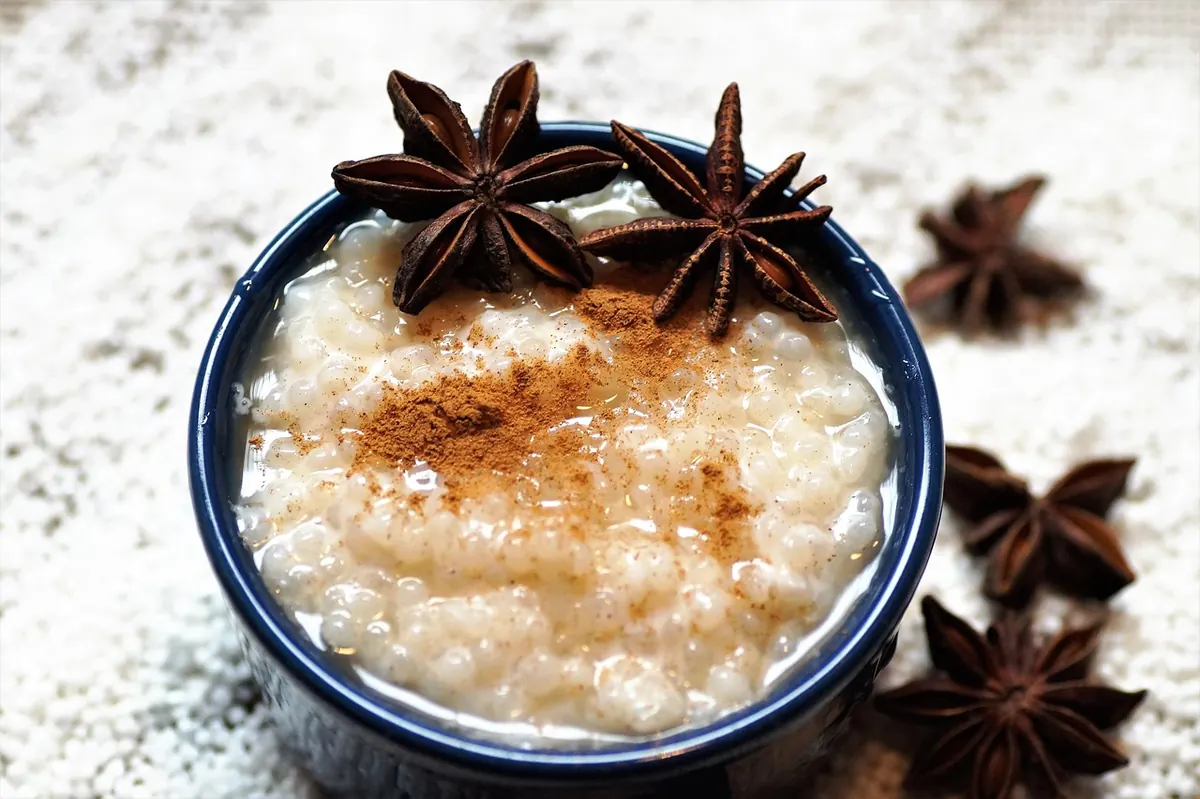
Tapioca comes from cassava starch, sold as instant granules, small pearls (often labeled "seed" tapioca), or fat pearls meant for bubble tea. You simmer it in milk with sugar, usually eggs and vanilla, and heat does the work: the starch granules absorb liquid, swell, and thicken the whole pot. Eggs turn it custardy; without them it's lighter and more translucent. And yes, the pearls stay visible. That's the point.
Chia pudding is dense and slightly slippery, with tiny seeds suspended throughout. Whole seeds give you a faint pop with each bite; ground chia turns the mixture smooth and uniform, closer to a set custard or a very thick smoothie. The failure modes are predictable. Too few seeds and you get flavored milk with grit. Too many, or a batch left uncovered, and it turns into a rubbery brick that needs loosening with extra milk.
Tapioca is the opposite experience: distinct pearls floating in a creamy base. Small pearls feel delicate, almost like tiny beads of caviar. Large pearls are bouncy and substantial, and they need to be cooked separately in water before folding into the pudding, or the milk turns gluey around them. Temperature changes tapioca a lot. Warm from the pot, it's loose and comforting, like rice pudding. Chilled overnight, it firms up considerably. Serve it the way you prefer, but decide before you cook, because reheating chilled tapioca loosens it only partly.
Chia is forgiving but clumps if you rush it. Tapioca is simple but scorches if you walk away. A few habits fix most problems:
Both puddings keep about four days covered in the refrigerator. Neither freezes well — ice crystals wreck chia's gel and make tapioca weep — so make what you'll eat.
Chia is a whole seed, so the fiber, plant protein, and ALA omega-3 fat come along with it, plus minerals like calcium and magnesium. What lands in your bowl still depends on what you pour: coconut milk, oat milk, or skim milk, honey or no honey, all change the picture. Chia also brings a fair number of calories for its volume, which surprises people who treat it as a light snack.
Tapioca starch is nearly all carbohydrate, with very little fiber, protein, or fat. Whatever protein and richness the pudding has comes from the milk and eggs you add. That doesn't make it a bad dessert — it's a dessert. It just isn't a nutritional stand-in for chia, and the two won't behave the same way in your body. If you're managing blood sugar or another condition, a doctor or registered dietitian is the right person to ask about how either fits your day.
Choose chia when you want something you can build in advance and carry out the door. It shines in layered jars with yogurt, berries, and granola; as a dairy-free or vegan option that needs no eggs; and as a thick base you can blend smooth and pour into glasses. It takes flavor well — cinnamon, cocoa, espresso, citrus zest, a pinch of salt — and it's at its best cold on a warm morning.
Tapioca belongs to the comfort side of the menu. Serve it warm in small bowls with a spoonful of jam or stewed fruit stirred in. Make the coconut milk version with mango for something closer to Thai street dessert. Bring it to a holiday table or a potluck where people expect something old-fashioned, and it will disappear. Vanilla is the anchor; lemon zest, brown sugar, or a grating of nutmeg are all worthwhile additions.
The fastest way to know which one you love is to make one cup of each on the same afternoon, chill both, and taste them side by side. Note the ratios on the jar with a piece of tape: date, seeds or pearls, liquid, sweetener. Two or three rounds of that and you'll stop guessing. Chia will always be the practical, make-ahead option; tapioca will always be the one that feels like a treat. Most kitchens are better off keeping both in the pantry and letting the morning — or the mood — decide.
Photo: ivabalk / Pixabay
Exploring sweet desserts and curious pudding recipes.
Copyright © 2026 Curious Pudding. All rights reserved. Curious Pudding.